


Choosing audio gear for a non-audiophile
Buying the wrong audio gear is easy and can lead to a bad experience. We purchase stereo equipment with the goal of lounging away in audio bliss. My goal is to provide you with helpful guidelines for buying a good audio system without breaking the bank. For this article, I’m focusing mainly on higher-end gear (but not the highest-end) as opposed to $400 plastic soundbars from Costo. I think that stuff can be fun but not worth my opinion. My goal here All the information provided is to provide you with intel based on my own personal experiences.
Pick the right design
Over the past 4 decades many of my buys have been sold in the pre-owned audio market. Most of my mistakes were impulsive purchases based on a positive professional review. It’s not that the gear was bad. Either it didn’t match up to the rest of my system, or the component was intended for something I didn’t want. For instance, using the NAD M10V2 as a pre-amplifier had me disappointed. It makes a superb integrated amplifier, but it wasn’t designed to be a pre-amp, even though it’s expensive at $2,500. Expecting it to be universally awesome is wrong.
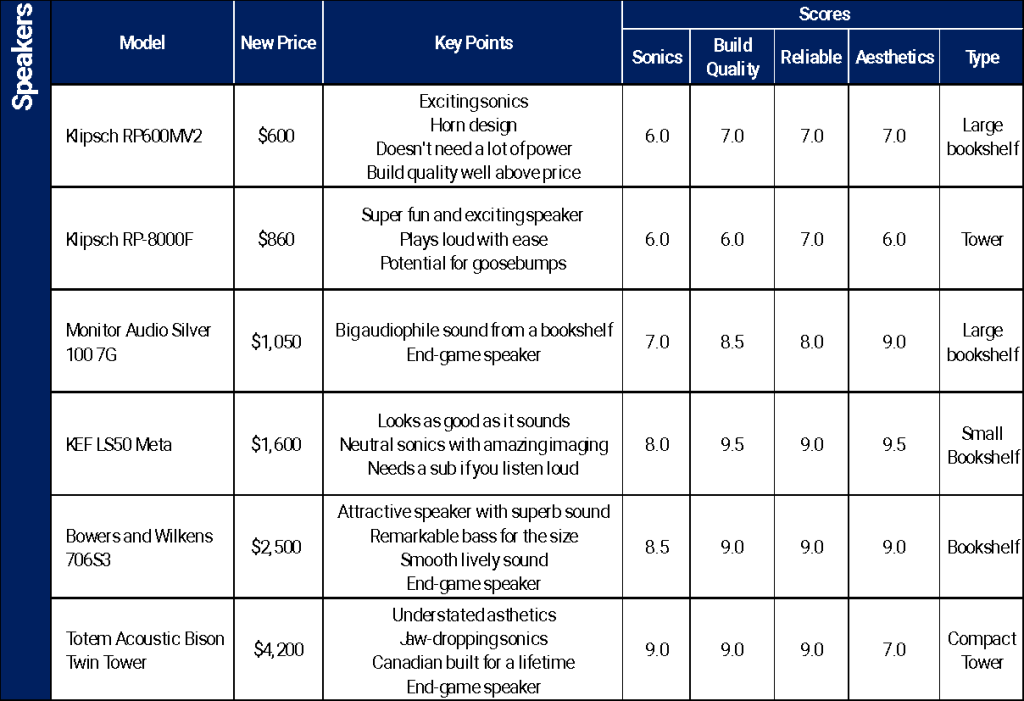
When considering a speaker system, consider what you listen to and how you listen to it. Unless you live alone, please consider others in your home. Buying a large tower speaker which may be a work of art to us but a big ugly black box to your spouse is inconsiderate and that’s not who we are, right? For the headbangers or bass heads I’d always point you towards Klipsch. They are designed to play loudly with ease without draining your bank account. Choosing the KEF LS50, one of my favorite speakers, to crank Rob Zombie for a weekend will have you reaching for the volume knob to lower it. It’s not designed for that. Jazz listeners or acoustic fans are blessed with many more options. Listening to jazz legend Thelonious Monk through those same KEFs will have you dancing or at the very least tapping your feet to the music. The KEFs also overdeliver if you’re seeking background music played at lower volumes. Choosing the proper speaker design will open your eyes and ears to all the nuances within the music you may have never heard. My favorite song “One” from Metallica has levels within the lower frequencies only heard through a speaker designed to provide that. On a poorly designed system, you may only hear one note. In my system, I’m able to hear and place each drum within the drum kit on Pink Floyd’s “Hey You” floating across the bottom of the soundstage. We’re talking about goosebumps. If you choose the right system, you’ll find yourself engaged and looking to hear all your favorite songs. Once you get a taste of that, you’re hooked.
Pick the right designer
At this point in my journey, once I’ve decided on a goal, I dig into the various manufacturers that offer the component I’m looking for. This isn’t difficult once you are aware of this factor. Like any expensive purchase, understanding why a company designed a component is a great start. I’m not talking about an A/V receivers which are build for the same reasons and only segmented by price point. Also, understanding manufacturers’ history and current state is important. You can’t go wrong selecting the tried-and-true companies like NAD, Parasound, Marantz, Macintosh, Rotel, Bowers, some Klipsch and Wilkens among others. Many of the newer companies or smaller boutique establishments offer superb gear however it’ll take longer and more in-depth research.
Where the product is made matters also. Equipment designed and made in the host country will cost more. Many of the tried-and-true companies use Chinese factories for their lower-level products and have their top lines manufactured in the host country. Marantz and Denon are prime examples of such companies. Marantz’s top three lines are made in Japan and tend to use better casing. The products made in China are also built well and can have great sonics. When I choose a manufacturer, whose products are made in China, I want a well-established company with strict requirements. Another good reason to select your next buy from a tried-and-true company. You’ll pay more now and save drama, money, and frustration down the road.
A few smart recommendations
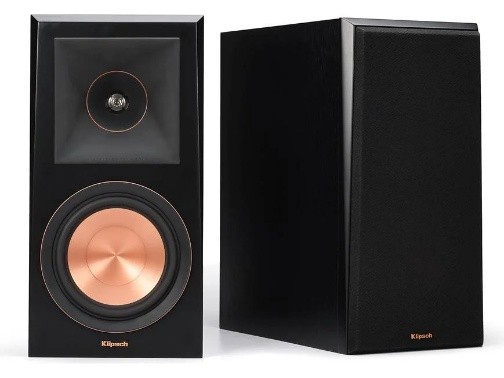
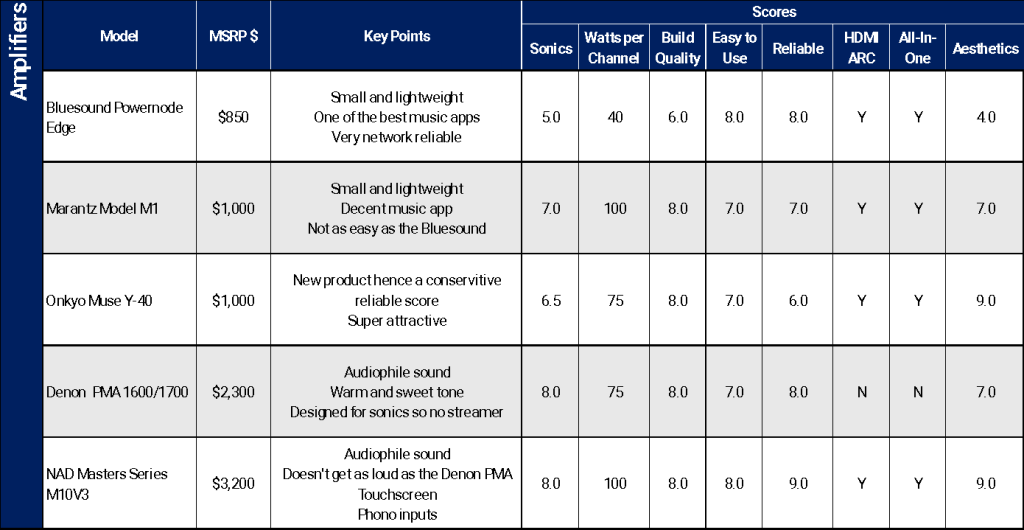
So, if you’re a casual buyer not interested in peeling the onion on the market, sticking to a well-established company with deep roots in the industry will be smart. The companies I identified as tried-and-true above sell expensive products so don’t expect this article to point out the market’s biggest bargains, that will be the focus of another article. Let’s say you are that casual consumer looking for a new stereo amp and speakers, I’d point you to the NAD M100v3 ($3,100) or NAD C 3050 ($1,900). These are not the best value and arguably, not the best sonically. I have a handful of friends with some disposable income that leverage my knowledge when making any AV purchase. If I identify them as a casual listener that just want some drama-free good equipment, I’m pointing them to either of those NADs and they’ll thank me forever. I know they’ll relentlessly harass me if their purchases are a let-down or break. Then I’m suggesting speakers I know will work with their tech ability, the NAD amplifier, their room and listening style. My taste in speakers always is north of the casual budget so I head straight to the Klipsch RP600MII, priced at $600 (or $400 on sale). I know that speaker will make me look good. Once my buddy buys the NAD C 3050 and the Klipsch RP600MII, he will likely never buy another stereo again. That system provides audiophile music streaming from your phone for $2,500 (or $3,000 if they buy the cables I suggest). I say suggest so I sound humble, but I usually demand that they buy good and reasonable cables, and it works.
I must mention there are products like WiiM Audio, Sonos, OSD Audio which I don’t list and would not suggest to my friends. They are more mainstream brands which offer mediocre sonics. Some may argue with me, but they’re built to a price point, and I prefer builds for a purpose. These brands bring music to your fingertips at a lower cost with inferior parts. I lump these brands in with Bose – cheap plastic solutions that don’t make me want to listen. When I walk into my sound room and look at my gear, it makes me want to listen.
Where to buy
Choosing the store for your purchase is almost as important as the manufacturer. I’m a big fan of Crutchfield.com, an online retailer that’s been around for three decades. They work very hard for your business, which isn’t as common as you’d like. They are also selective about which brands they sell. In essence, Crutchfield does much of the work I described earlier. They offer a wide range of products at all price points. For the casual buyer, I can’t think of a reason to look elsewhere. You still are on the hook for the component design but if Crutchfield carries it, buy it!
I tend to avoid Amazon because I see third-party sellers sometimes and I’d rather be safe. There are also big box stores like Best Buy and other large local stores, but their high-end options are limited and often out-of-stock. Bargain seekers may stumble on Alibaba.com or another thrifty site and be tempted. That may be fine for a knockoff pocketbook, but you’ll never hear me suggest that route for audio equipment. You may receive an empty aluminum chassis or a substandard build and have nowhere to go for help. Then there’s the fading small hi-fi shops which are scarce and often out-of-stock. Finally, there is the pre-owned market, which is substantial. My favorite is USAUDIOMART.COM, a great place to scoop up high-end electronics for a fraction of the original price. Excellent deals are easy to come by, just make sure you’re comfortable with the seller. As always, if it’s too good to be true…
My Tried-And-True List of Recommended Audio Components
Final Thoughts
This guide will steer you to successful purchases. Sitting back and truly enjoying your music cannot be interrupted by drama such as network drops, difficult to use music apps, or malfunctions. I hope by reading this article, you are either looking for some new gear or curious about the audio market and my intention is to put you on the right path. Good luck!
Our recommendations reflect our personal experience with the equipment reviewed and should be considered alongside your own listening preferences and room acoustics. We encourage readers to audition audio equipment whenever possible. Great sound is personal, and the best component is the one that brings you closer to your music.
