


Loudspeaker companies were developed from a visionary with passion for music and sound. Some swear by horn speakers while others prefer a flat ribbon panel speaker and those sticking to traditional woofer/dome tweeter options.
Having different types of speakers enhances the audiophile community by manufacturing a speaker with clear advantages in one area at the expense of another. Some cover all aspects of the sound, and you can expect to spend five figures for those brands.
For some, this is fun and an opportunity to learn and have chats with other audiophiles. Consider this topic as small talk if you want guaranteed engagement with fellow audiophiles.
Unfortunately, there’s the crowd using this as another reason to hate and divide. I’ve come across music lovers that will only listen to horn speakers and vice versa. That’s too bad because each technology is interesting and why not add a speaker to your collection that sounds amazing and different.
I appreciate the different technologies and own speakers from the main technological groups.
Traditional cone speakers
Traditional cone speakers are mounted in wooden cabinets and by far the most common loudspeaker found in homes. Not only are they a safer option in terms of sound and aesthetics, but they are also more accessible. Rarely will you find flat-panel speakers at your local big-box electronic store or even online.
Traditional cone speakers come in all sizes, colors, and arrays. Here is a general description of each array:
Two-Way Speakers
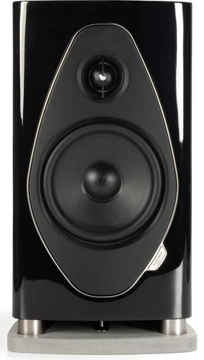
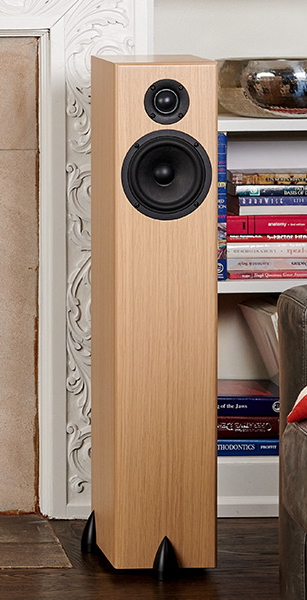
A two-way speaker has two drivers in a wooden cabinet, one woofer and one tweeter. Small monitors will have a 4”, 5” or 6” woofer and 1” tweeter, which are mostly made from metal or fabric and in the shape of a dome. The metal tweeter emphasizes the detail, sometimes at the expense of harshness. A some-dome tweeter is usually made of silk or other fabric and tends to emphasize a warmer non-harsh tone, sometimes at the expense of detail. When you choose a speaker, consider your listening habits and budget. Budget speakers will highlight those differences I just described. At higher price points, those differences become less obvious due to better engineering.
Three-Way Speakers
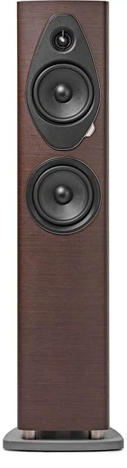
Tower speakers typically have either three-way or four-way driver arrays. The three-way will have the same tweeter as the two-way, one midrange driver, and one woofer. Inside the speaker is a crossover which you can think of as a distribution center. The crossover receives a full-range signal from your amplifier and splits the signal up based on frequencies and directs them to the appropriate driver.
Typically:
- Woofer: handles bass notes below roughly 350 Hz
- Midrange: handles most of the music including the important vocals; between roughly 350 Hz to 3,000 Hz
- Tweeter: covers frequencies above 3,000 Hz. Here’s where the detail and sparkle come from.
Four-Way Speakers
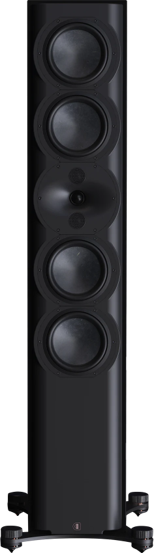
The four-way tower speakers are much less common. A four-way speaker will have an additional dedicated driver called the mid-woofer and handles frequencies from around 80 to 400 Hz. When well executed adding an additional woofer helps improve bass integration and reduces the workload of the other drivers. Speakers don’t like to work too hard.
While not as dynamic as a horn speaker or less transparent as a panel speaker, the traditional cone speaker is good at all things and a safer choice for most music lovers. Traditional cone speakers get along well with most amplifiers or receivers. Along with horn speakers, these are ideal for home-theater setups.
Panel Speakers
For music lovers chasing layers of depth and that last ounce of clarity, panel speakers can be magical.
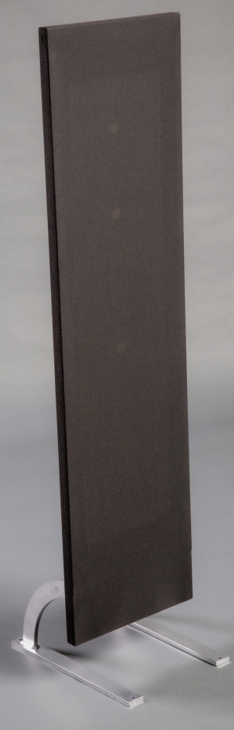
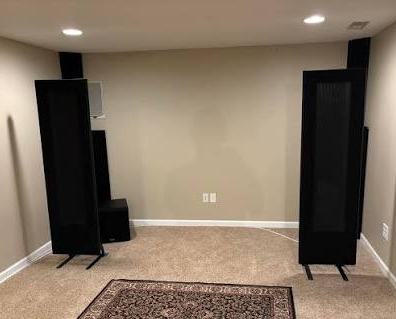
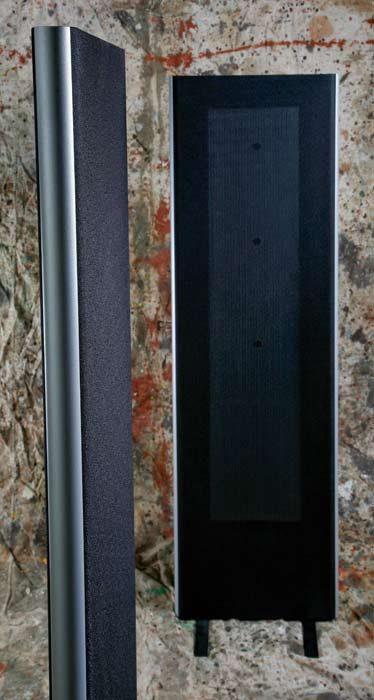
I own the Magnepan LRS+ and they deliver a sense of depth, width, and imaging like no other speaker in its price range.
I often compare panel loudspeakers to a high-performance sports car. They reward proper placement, but they demand more attention than traditional speakers.
The two main considerations to pay attention to are the amplifier and placement in the room.
Panel speakers are not efficient and require lots of current. Low powered tube amplifiers and smaller integrated amps and receivers are not going to work nearly as well.
I mentioned current because my Denon PMS-1700 NE drives the Magnepans beautifully with only 70 watts per side while a higher-powered NAD integrated amplifier couldn’t match the sonics.
Flat panel speakers fire sound forward and backwards, proving that jaw-dropping depth. Placing them against the rear wall is taboo and may get you fined by the audiophile police department. These are designed to be placed well into your room to get the most from them. They are tall flat panels covered in black speaker cloth so getting spousal approval is difficult. Although your cat’s claws will appreciate them.
My friend Dave loves Metallica and when he asks for my speaker recommendation, a flat panel speaker would not be on my list. Flat panel speakers may also have you wanting subwoofers. There are speakers for my jazz-loving friends and classical music fans. Pink Floyd fans that can live without the lowest frequencies should consider panel speakers. On ‘Shine on You Crazy Diamond’ the laugh from the left speaker scares the living daylights out of me every time I hear it, only from my panel speakers.
I’m certainly not discouraging anyone from buying them, but they’re speakers you have to genuinely want. Like owning a sports car, they’re very rewarding when you’re willing to put in the effort.
Horn Speakers
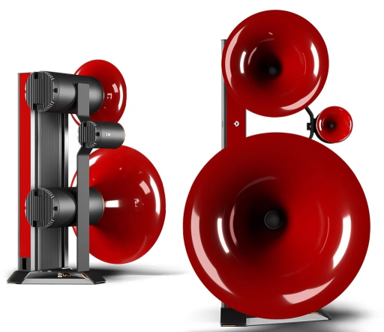
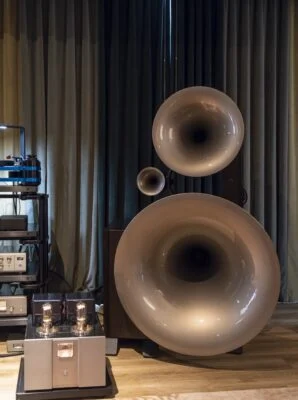
Less maintenance than the flat panel speaker but more than traditional cone speakers. The simplest way to describe a horn speaker is to imagine cupping your hands around your mouth to project your voice. A speaker horn works on a similar principle by increasing efficiency and controlling how sound is dispersed.
Horn speakers have their haters because on inadequate designs the sound is shouty and directional. Thanks to several passionate engineers today’s horn speakers are much less potent. Klipsch has built one of the largest speaker companies using horn speakers at all price levels. Historically, Klipsch had the stigma of being shouty and sounding like music played as if there were hands cupped around the sound. Klipsch has overcome that and is more accepted in the audiophile world.
My Metallica friend Dave, is getting horn speakers based on my recommendation. A well designed horn loudspeaker sounds live, dynamic and closer to a concert than any other speaker technology. Horns aren’t only for heavy metal. Jazz and classical music excels as well because of the sheer dynamics.
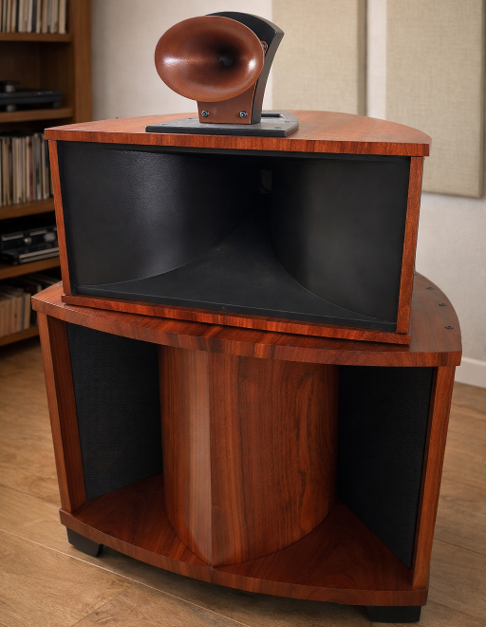
At the audio show AXPONA in 2026, I opened the door to Volti Audio’s room and immediately noticed sound unlike other rooms. Jazz was playing and the saxophone was big and sounding live, as in John Coltrane was in there belting out tunes. That experience was so great for me, I decided to leave the show for the day because the next two rooms sounded sad.
There are some considerations before deciding to live with horn speakers. The biggest for me is the physical size of the loudspeaker. The horns that I loved were always in a large box. A good horn speaker typically comes with a huge woofer, either 12 or 15 inches so the cabinet is at least three-feet tall by 15-inches wide and deep, and often bigger.
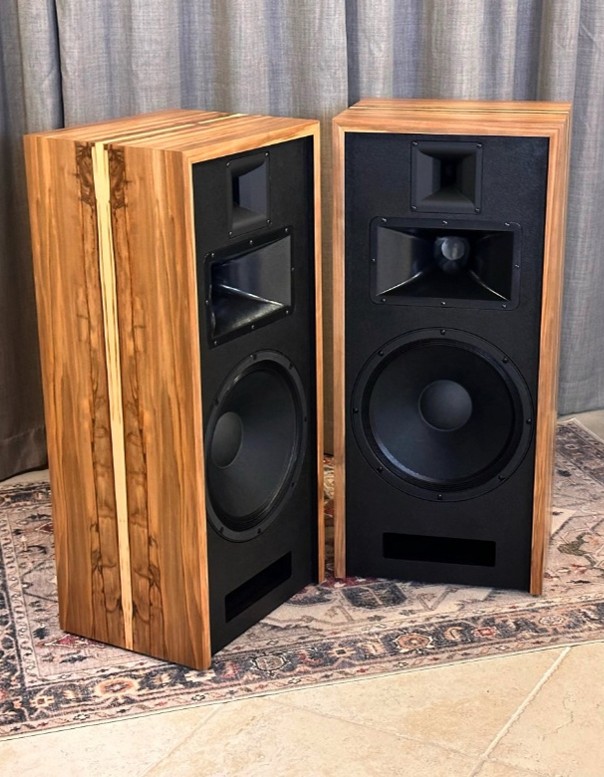
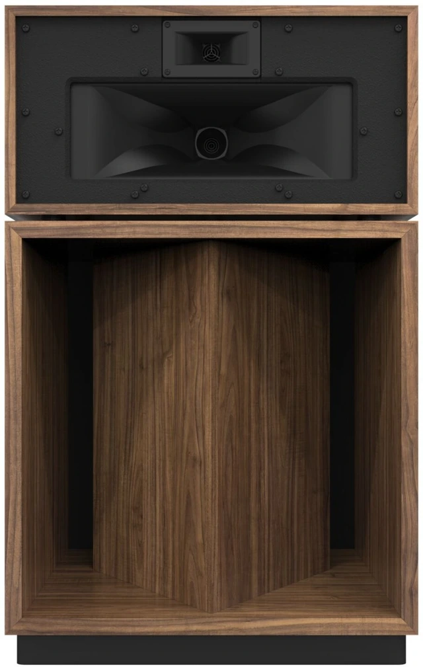
In terms of sonics, a poorly designed horn speaker will likely disappoint you in the long run. A horn speaker is not for the frugal or budget minded music lover. If a horn design sounds ideal for you, look to the Klipsch Reference Premier, Klipsch Heritage line, and Volti Audio. Any of those three suggestions will play all genres of music very well and excel in classic rock, hard rock, and heavy metal.
Horn speakers will play well with most amps, especially that low-powered tube amplifier. If you ever wanted to experience tube sound, a horn speaker will pair well and you don’t need to spend five figures to hear the tube warmth. Many low-powered integrated amplifiers will get along with horn speakers.
Final Thoughts
I’m grateful we have different speaker designs to choose from. I struggle to understand the music lover unable to appreciate the variety in speaker technologies. In my opinion, the audiophile hobby is better with an open mind.
If I had to choose only one speaker technology for the rest of my life, I’d be sad then I’d choose a horn speaker. To me, it’s the one speaker with the least restrictions. I enjoy listening loud and I would enjoy it more if I didn’t worry about the speaker breaking. Horn speakers appear durable and don’t need as much volume to play 100 decibels.
A well-designed horn speaker, like the Volti Audio Razz or Lucera maintain control at that level. The Heritage line from Klipsch are also among my favorites although they don’t appear as well built as the Volti’s.
Today I own Klipsch Heresy hornspeaker and the Magnepan LRS+ flat panel speaker and several traditional cone speakers.
Ironically, I spend most of my listening time with my traditional cone speakers.
While I love the Heresy’s and LRS+ speakers, they don’t excel at enough. I look at them as bench players I bring in when I need a grand slam.
I think non-traditional speaker designs like horns or flat panels require a budget beyong my financial means. Both the Heresy and LRS+ are the entry point of their lines and too limited to be in the starting line-up. I bet either then Klipsch, Cornwall or Volti Razz would easily be starters, like expensive free agents.
Our recommendations reflect our personal experience with the equipment reviewed and should be considered alongside your own listening preferences and room acoustics. We encourage readers to audition audio equipment whenever possible. Great sound is personal, and the best component is the one that brings you closer to your music.
